Confusion often arises when distinguishing between shot blasting machines and sand blasting machines. While the terms may seem similar, sandblasting and shot blasting are distinct processes, both integral to the entire blasting industry.
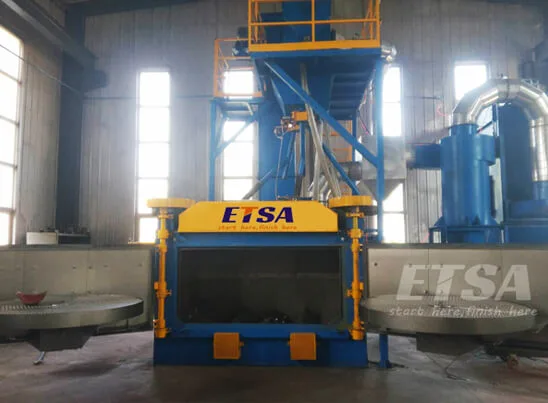
Understanding the Basics
Differentiating between shot blasting machine and sand blasting machine is quite straightforward. The essence lies in how materials are cleaned, refurbished, and prepared for the coating techniques employed by industry experts. Fundamentally, sandblasting involves using compressed air to propel a form of abrasive media, like sand, onto the product to be treated. The shot blasting process, on the other hand, utilizes the centrifugal force generated by a mechanical device to propel the abrasive media onto the product.
To be candid, the term "sandblasting" is now a misnomer. The industry rarely uses sand as an abrasive medium due to certain characteristics making it challenging to work with. Today's market offers superior alternatives to sand, such as media made from minerals, metals, glass, plastics, and organics like corn cob and walnut shells.
Why Sand is Rarely Used in Sandblasting
Sand, while more accessible than other media, presents challenges due to issues like moisture content, making it difficult to disperse using compressed air. Moreover, sand contains many impurities in its natural supply.
The primary challenge of using sand as an abrasive medium lies in its health hazards. Sand used in sandblasting is made from silica dioxide. When inhaled, silica particles can enter the respiratory system, leading to severe respiratory diseases like silicosis. Silica dust is also a known cause of lung cancer.
The U.S. Occupational Safety and Health Administration (OSHA) holds a somewhat ambiguous stance on inhaled silica particles among American workers. While OSHA hasn't outright banned the use of silica sand for sandblasting operations, they have implemented sufficient safety regulations to prevent today's activities termed as "sandblasting." Familiarizing yourself with OSHA's guidelines on protecting workers from the hazards of blasting materials is crucial.
Beyond being a hazardous blasting material, sand also cannot compare to the excellent choices of modern abrasives widely used today. Its use is limited to compressed air sandblasting methods. Centrifugal/mechanical abrasive processing methods are more versatile than sandblasting. However, the method you choose to prepare the product for finishing depends on many variables.
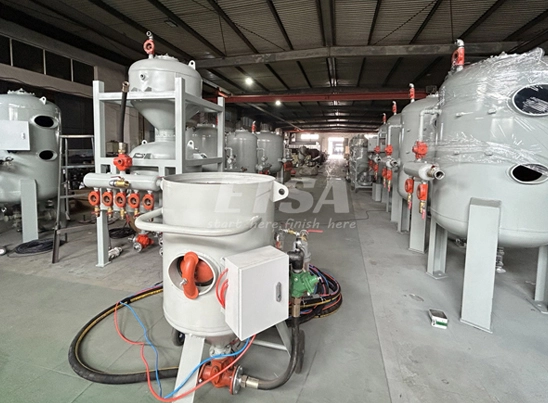
Understanding Sandblasting
Irrespective of the abrasive medium, the term "sandblasting" refers to the process of propelling abrasive media using compressed air. This cleaning and preparation process employs compressed air as the power source, directing a high-pressure abrasive flow towards a given surface. This surface could be automotive parts to remove dirt, grease, and oil. It might be rusted chains in a shipyard undergoing repair. Or the surface could be an old file cabinet being readied for powder coating.
Sandblasting is a time-tested pre-processing technique with a history of over 100 years. The industrial sand blasting machine has evolved from a freely spraying stream of sand to generating harmful dust clouds, transforming into highly precise enclosed shells with controlled abrasive flow. The media used in sandblasting has also shifted from sand to more humane materials.
Despite changes in equipment and materials, sandblasting remains the most common and preferred abrasive processing method. It is particularly suitable for soft and delicate materials, providing a final surface finish. Sandblasting is also more economical to purchase as equipment systems, easier to operate, and offers consumers excellent quality.
Understanding Shot Blasting
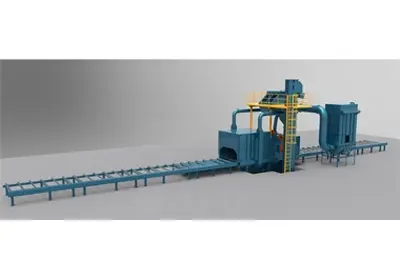
The term "shot blasting" refers to the process of propelling abrasive media material using centrifugal force or mechanical force. The pressurized system in shot blasting is entirely different from sandblasting. This abrasive processing method employs a device resembling a spinning wheel to centrifugally accelerate granular material, projecting it onto the surface.
Shot blasting is more aggressive compared to sandblasting. It is typically used on larger and more challenging preparation objects that require powerful forces and dense abrasive materials for cleaning and surface preparation. Shot blasting also requires strict control since unrestricted shot blasting force can lead to collateral damage.
In large operations, you often find shot blasting centrifugal wear processing. This could involve abrasive blasting rough surfaces like repairing frames or reclaiming steel containers. Shot blasting is also employed in tasks requiring the shot blasting of engine components to enhance ductility.
Choosing Between Sandblasting and Shot Blasting
The question of whether sandblasting or shot blasting is more effective has no definitive answer. Sandblasting operations involve many variables. The best approach depends on the surface you're treating and the type of finish you anticipate.
Sandblasting is generally a smoother, less invasive grinding process. However, this also depends on the compressed air pressure used and the chosen abrasive medium. Since sandblasting's intensity is not as high as shot blasting, it is more forgiving. Using light pressure and soft media materials like organics or glass, you can treat very sensitive surfaces without accidental damage.
Sandblasting is an ideal solution for cleaning delicate electronic parts or connectors prone to corrosion. Various media options are available for sandblasting, such as aluminum oxide, capable of removing surface contaminants while keeping the subsurface clean and intact. To make sandblasting more durable, you can use silicon carbide as a medium, without worrying about excessive wear.
When deep grinding on denser materials is required, shot blasting should be the method of choice. Shot blasting is potentially gentler and more time-consuming when dealing with gears and shafts. Shot blasting quickly prepares thick and heavy surfaces, such as metal hulls and truck hubs.
In summary, sandblasting is both quick and economical, providing an effective surface preparation method. Shot blasting is a more involved process, utilizing more advanced equipment. Consequently, shot blasting is slower and typically more expensive. However, some jobs cannot be done with sandblasting alone. In those cases, shot blasting is your only option for surface preparation.
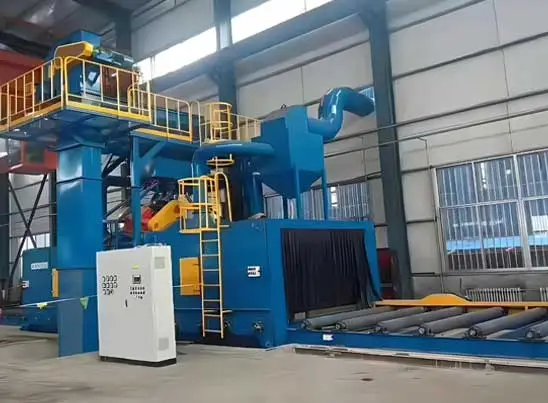
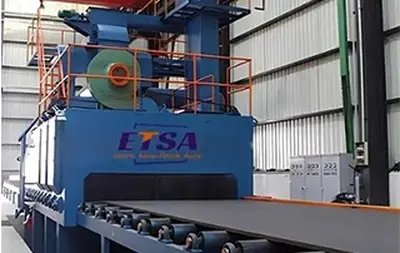
Both sandblasting and shot blasting processes use different types of equipment. Both types offer effective surface preparation methods and are commonly used in metal coating technologies, such as rust removal, descaling, deburring, and general cleaning. They employ two independent systems known as the air drum and turbine devices.



 Call us on:
  Email Us:
  No. 3213 Lingshanwan Road, Huangdao District, Qingdao City, China